
Nvidia outlines ROI framework for large-scale AI factories
 3 sources · SiliconANGLE · NVIDIA Blog
- Neutral: Each megawatt of AI factory capacity costs roughly $60 million to build
- Boom: Nvidia says factories are now being built at megawatt to gigawatt scale
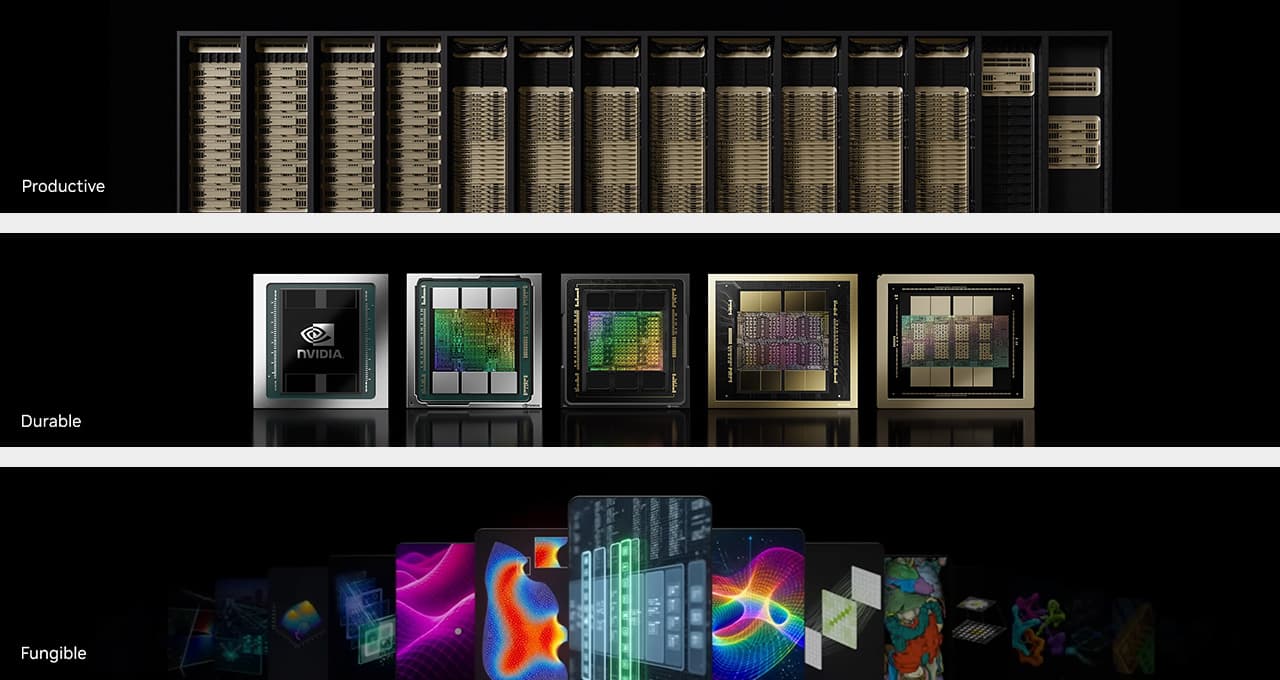
- Neutral: Nvidia defines earning capacity, durability and fungibility as the three ROI drivers
- Boom: SiliconANGLE tied the framework specifically to inference efficiency economics
The story in full
Nvidia published a blog post on October 1, 2026, laying out how operators of AI factories should evaluate return on investment. The post states that each megawatt of AI factory capacity costs roughly $60 million to build, and that factories are now being constructed at megawatt to gigawatt scale. Nvidia identifies three factors shaping returns: earning capacity, durability, and fungibility.
The framework is aimed at capital allocators deciding whether to commit to large infrastructure builds. Nvidia positions its own hardware and software stack as central to meeting those three criteria, though the post does not quantify specific performance benchmarks or name third-party operators.
Analysis
410 wordsOn October 1, 2026, Nvidia published a blog post laying out a framework for how operators of large-scale AI infrastructure should calculate return on investment. The post anchors the discussion in a specific cost figure: each megawatt of AI factory capacity costs roughly $60 million to build. Nvidia notes that these facilities are now being planned and constructed at scales ranging from single megawatts up to gigawatts, implying total capital commitments that can run into the tens or hundreds of billions of dollars. The framework organizes ROI around three named criteria, earning capacity, durability, and fungibility, and positions Nvidia's own hardware and software stack as the means by which operators can satisfy all three. SiliconANGLE connected the framework specifically to inference efficiency economics, suggesting the post is partly aimed at justifying infrastructure spend as AI workloads shift from training toward deployment.
The practical significance of the post is that Nvidia is not simply describing a market, it is attempting to define the vocabulary that capital allocators use when deciding whether to build. By authoring the ROI framework itself, Nvidia shapes which questions get asked and which metrics get treated as standard. The $60 million per megawatt figure, for instance, becomes a reference point for any operator modeling a business case. What remains genuinely in dispute is whether the three criteria Nvidia names are neutral measures of infrastructure quality or criteria that happen to favor Nvidia's own product architecture over competing stacks from AMD, Intel, or custom silicon providers.
None of the three camps have published reactions to this story yet. Pro-AI voices would typically treat a framework like this as a useful maturation signal, arguing that rigorous ROI language accelerates legitimate capital formation and separates serious infrastructure investment from hype. Anti-AI voices would likely argue that dressing up a sales document as industry guidance obscures the enormous resource commitments involved and concentrates market power further in Nvidia's hands. Middle-ground observers would probably focus on the fungibility criterion specifically, asking whether hardware marketed as flexible for diverse workloads actually delivers that flexibility in practice, or whether operators find themselves locked into a single vendor's ecosystem once construction begins.
The argument will sharpen as large cloud providers and sovereign AI programs publish their own infrastructure economics. Any independent analysis that either validates or challenges the $60 million per megawatt baseline, or that benchmarks earning capacity and durability across competing hardware vendors, would give capital allocators something to weigh against Nvidia's self-authored framework.
Where do you stand?
Add your take
0 reader votesSign in with Google to pick a side and post. Your vote moves the story's Doom / Boom score.
Sources
4 articles from 2 outlets- SiliconANGLENvidia links AI factory economics to inference and efficiency
- NVIDIA BlogProductive, Durable, Fungible: How NVIDIA AI Factories Maximize Return on Investment
- NVIDIA BlogProductive, Durable, Fungible: How NVIDIA AI Factories Maximize Return on Investment
- NVIDIA BlogProductive, Durable, Fungible: How NVIDIA AI Factories Maximize Return on Investment
Related Splits
All stories →
Analysts raise Nvidia price targets heading into late 2026
Multiple analysts updated their Nvidia price targets in late September and early October 2026, with coverage spanning outlets including Benzinga, MarketBeat, inkl.com, and Finbold. Wilkinson Global...
Barclays sets $275 Nvidia target citing $401B hyperscaler revenue
On October 1, 2026, Barclays analysts projected that Nvidia's revenue from hyperscaler customers could reach $401 billion in 2027, setting a price target of $275 for...
Jensen Huang and Mark Zuckerberg privately challenged Dario Amodei over AI warnings
Nvidia CEO Jensen Huang and Meta CEO Mark Zuckerberg privately confronted Anthropic CEO Dario Amodei over his public warnings about AI risks, according to a Wall...